Quarticon is basically a company that helps online shops sell more by using AI to personalize the shopping experience for every customer. Let’s walk through a realistic example of how an online store changes after using Quarticon.
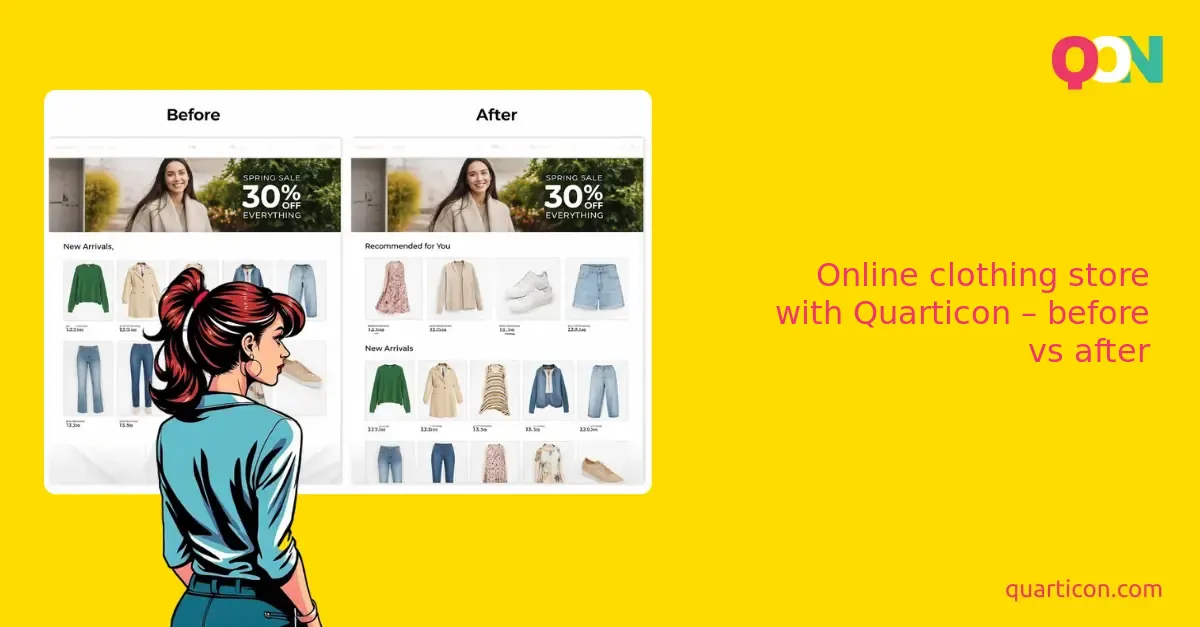
🔴 BEFORE using Quarticon
A typical store without AI:
- Everyone sees the same homepage
- Product recommendations are generic:
- “Best sellers”
- “New arrivals”
- Search is basic:
- Typo = bad results
- “red dress” shows anything with “red” OR “dress”
- Marketing emails are mass-sent:
- Same newsletter to all users
👉 Result:
- Lower engagement
- Customers leave without buying
- Missed sales opportunities
🟢 AFTER using Quarticon
Now the store uses AI from Quarticon.
Step 1: Customer behavior tracking
Let’s say a user:
- browses sneakers
- clicks on black Nike shoes
- adds one pair to cart but doesn’t buy
Quarticon collects this data in real time.
Step 2: AI personalization kicks in
Homepage changes
Next time the user visits:
- sees sneakers first, not random products
- gets “Recommended for you” based on browsing
Product recommendations
Instead of generic suggestions:
- “You may also like” shows:
- similar sneakers
- same brand or style
- “Others also bought” shows:
- socks, shoe care items
Smarter search
User types: “nik shoes blk”
Quarticon understands:
- “nik” → Nike
- “blk” → black
👉 Shows correct products instantly
Automated email follow-up
Since the user abandoned their cart:
They automatically receive:
- a reminder email
- possibly a discount
- exact product they viewed
Real-time targeting
If the user hesitates:
- system may show:
- “Only 2 left in stock”
- limited-time offer
Final result
Compared to before, the store gets:
- ✅ Higher conversion rates (more purchases)
- ✅ Bigger cart value (people buy more items)
- ✅ Better user experience
- ✅ Less manual work for marketers
Simple analogy
Quarticon works like a very smart shop assistant who:
- remembers every customer
- learns their taste instantly
- suggests exactly what they want
- and follows up if they leave
Quarticon’s products used in the example:
- AI Product Recommendations – Behavior tracking, training and building product recommendations
- Smart Search – search experience
- AI-Mails – automated user’s follow up with product offering