Recommendations are everywhere. In every online store, in apps, on social media, on TV. Sounds great – a system that knows what you’ll like.
But here’s the catch: not all recommendations are the same. Some systems are pure genius. Others? It’s like a shop assistant who completely ignores you and doesn’t observe what you’re doing.
Not all recommendations are equal. The difference between a good system and a bad one can mean the customer buys… or goes to the competition.
In this post, we’ll explain it illustratively, with a simple example, to see how different approaches to recommendations yield completely different results. You don’t need to be a tech expert. Just imagine a scene in a regular clothing store.
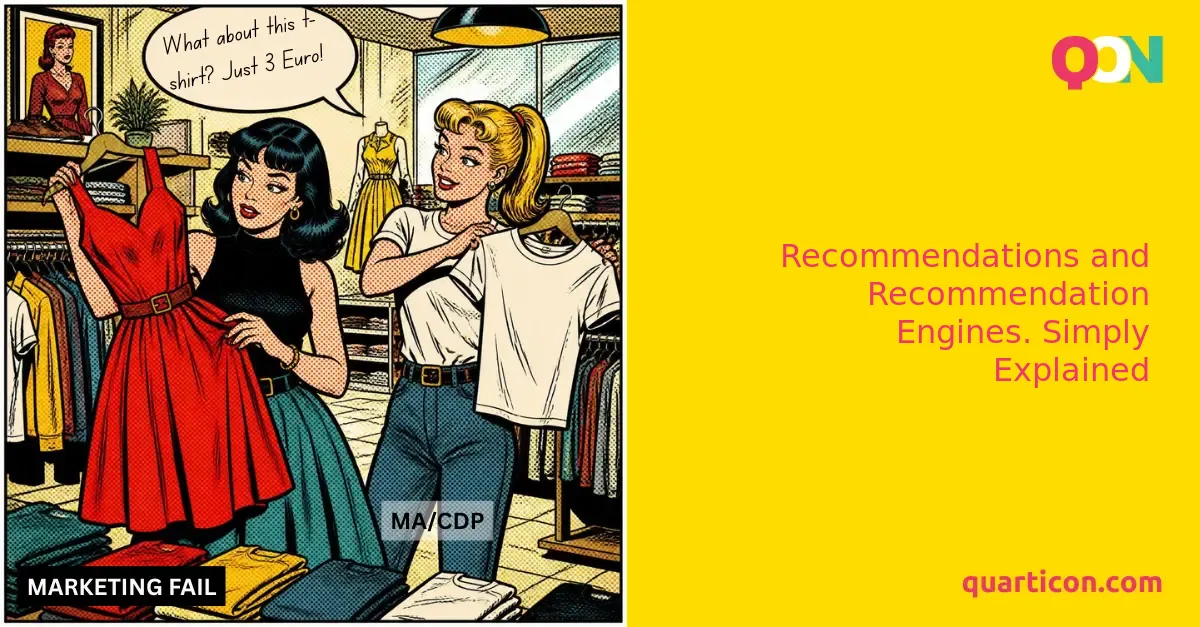
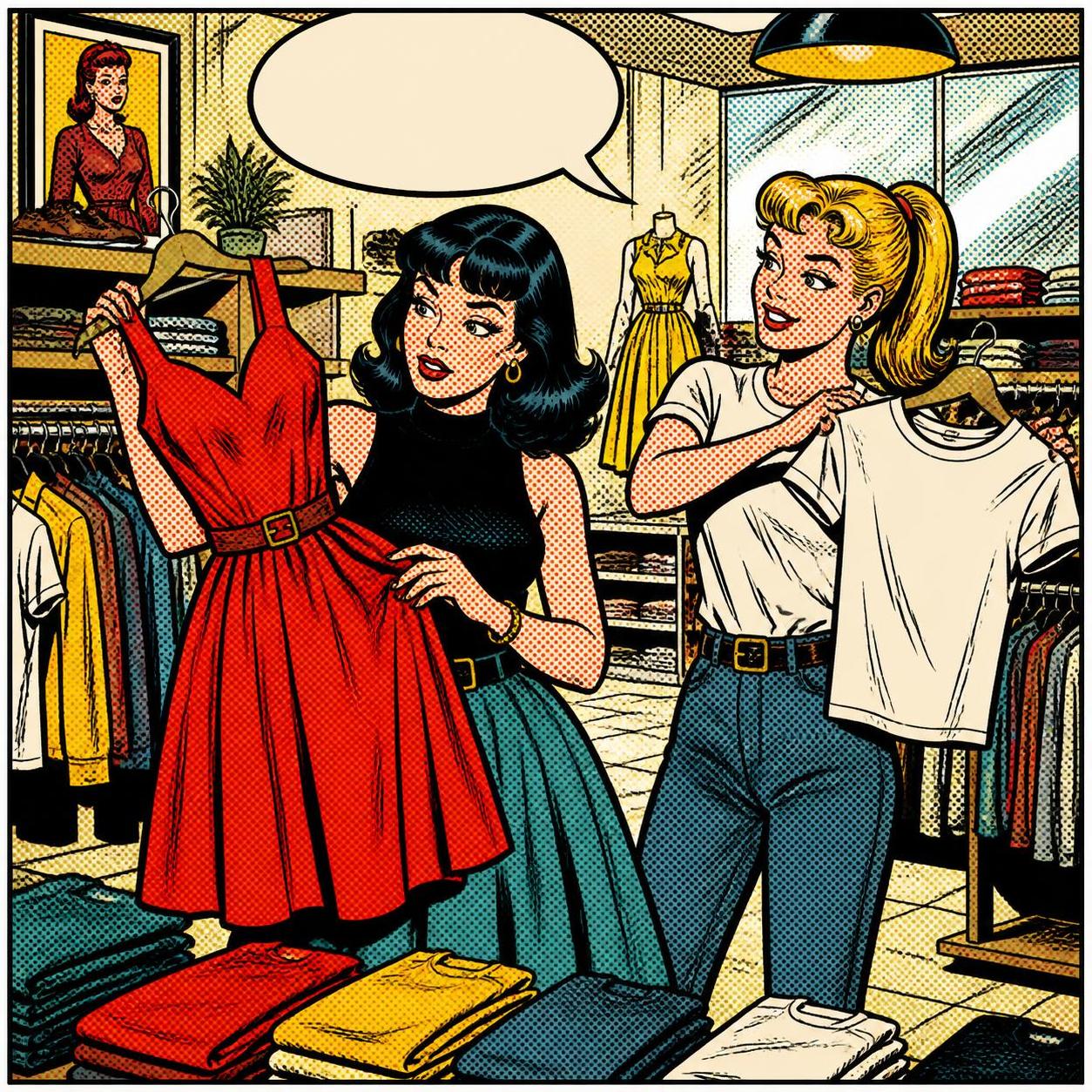
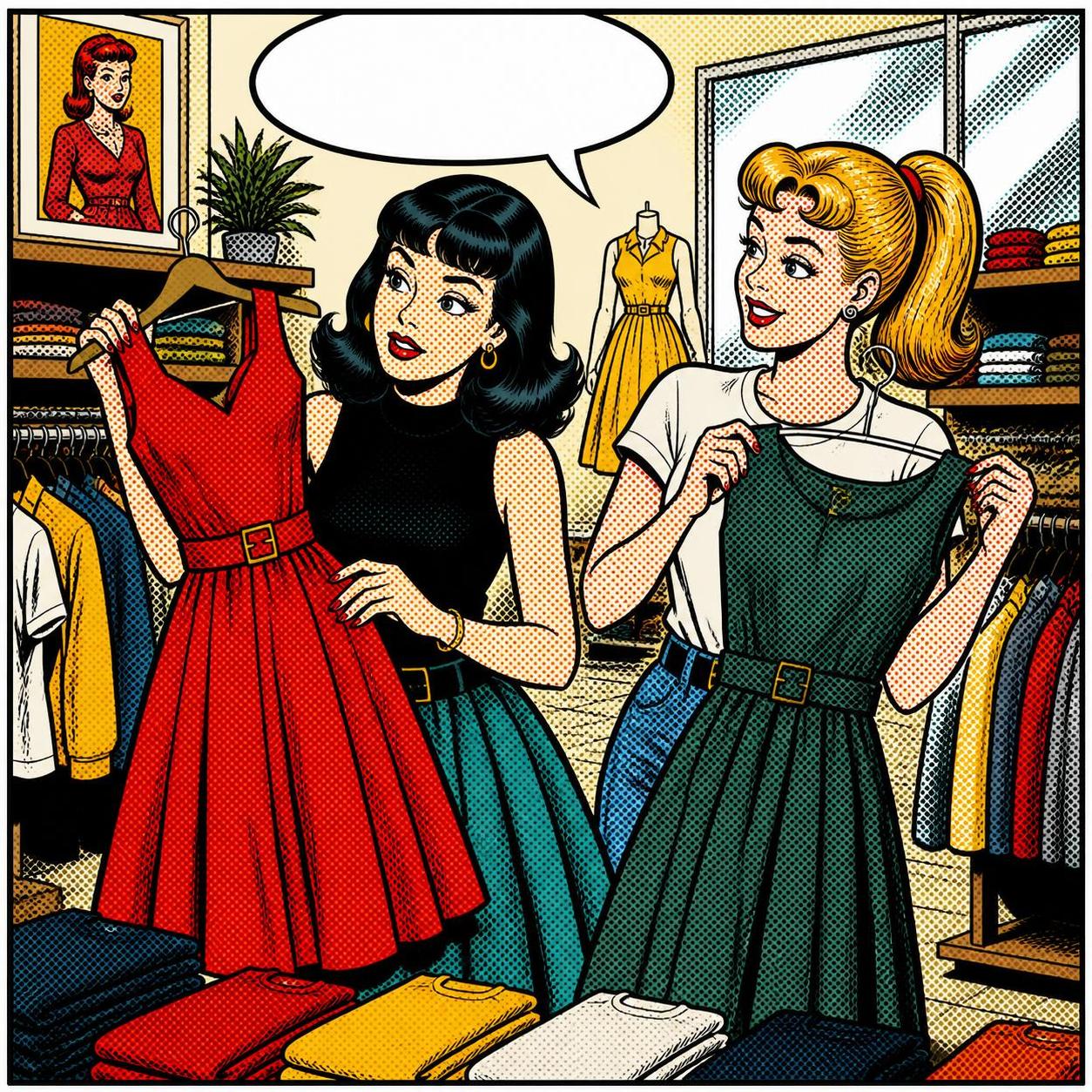
We have a clothing store, just a regular one, on Ordinary Street. The best-selling items are t-shirts for €3. White, yellow, green. A new customer enters the store. She browses a red dress for €100.
What happens next depends on what recommendations are working in the background.
The Most Common Case
So a new customer enters the store. She browses a red dress for €100.
The assistant approaches and says: “You’d better buy this t-shirt. Only €3”.
Fail! Something’s not right, is it?
This is exactly how the simplest “recommendation frames” work on e-commerce platforms. The system recommends what sells best, regardless of what the customer is doing.
Does it consider the customer’s preferences? No. Does it adapt in real-time? No.
How is it most often upgraded? See the case below.
Data-driven Case with CDP/MA
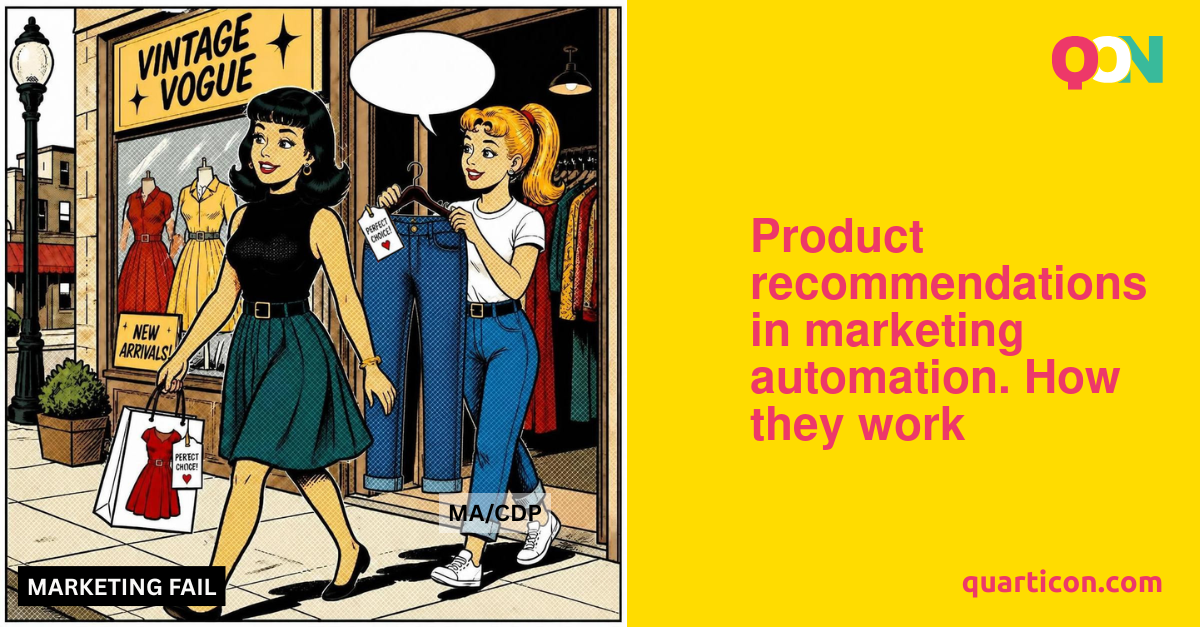
Let’s start again – a customer enters the store. It turns out she’s not new. The assistant recognizes her. It’s Carine.
The assistant shouts at the door: “Good morning, Ms. Carine!”.
[Hooray! The system recognized the customer]
Ms Carine responds and calmly approaches the dresses and looks at the red one for €100. The assistant, a smart guy, remembers that Ms Carine bought pants a month ago, so she suggests: “Ms. Carine, we have great pants on sale”.
Fail! And again there’s a problem… The assistant relies on historical data. The system reacts to what the customer bought earlier, not to what she’s doing now. Only tomorrow will the system (the assistant) realize that Ms Carine came for something completely different.
Tomorrow is already too late. The customer has already left without a purchase.

This is how marketing automation and CDP work, they remember customers who have already bought before, based on segments (bought pants), and on history, which today has no significance.
And what does it do for new, anonymous, incognito, with ad blockers? And that’s 95% of your customers. Those recognized are only 5%!
For 95% of your potential customers, the assistant behaves like in the first case. “You’d better buy this t-shirt. Only €3.
Ms Carine takes another dress. Assistant: “Or maybe this green t-shirt. Also only €3”.
Product Recommendation Engine
Now the same scene, but with a modern recommendation system. The customer comes and looks at a red dress for €100. The recommendation system doesn’t care about the customer’s name, so it won’t greet her by name. If it’s a recognized customer, it will know she bought pants 30 days ago, but not as Ms Carine, but as their ID, let’s say X Æ A-12 😉
The assistant approaches and suggests a similar dress model that is in stock. The customer takes another dress, but hangs it back, the assistant (system) sees this.
The assistant, having learned from tens of thousands of previous cases, has seen it all and suggests a third dress, the perfect one. The customer buys.
The assistant adapted in real-time to the customer’s signals. She used knowledge from thousands of similar cases. She proposed a product based on current behavior, not history. It worked — the customer bought.
Comparison: Three Versions Side by Side
| Regular Recommendations | Recommendations in CDP/MA | AI Recommendation Engine | |
|---|---|---|---|
| Understands current behavior? | ❌ No | ❌ No | ✅ Yes, in real-time |
| Works for new customers? | ❌ No | ❌ No | ✅ Yes |
| Works for regular customers? | ❌ No | ⚠️ Yes, but with delays and in segments | ✅ Yes, immediately |
| Learns continuously? | ❌ No | ❌ No | ✅ Yes |
| Percentage of wasted opportunities | 100% | Surely 95% | Minimum |
Most e-commerce relies on systems that, at best, update when the customer last logged in. It’s like our assistant who suggests pants and doesn’t observe what’s happening now.
AI product recommendation engines work differently: they adapt immediately, learn from every interaction, and work for everyone, whether the customer is new or regular.
It’s the difference between:
- A system that shouts: “Buy what everyone else is buying!”
- A system that listens: “I see you like this dress, and I know a similar one you’ll like even more.”
See the difference! It’s not just about: will it be better, because it will. It’s also about – how to stop causing harm immediately. Because the first and second cases are destroying customer experience.
Schedule a demo to learn more.
For the curious, less illustrative on this topic on our site: product recommendation engine